
Peter Chang x Yingtao
Monday, August 24th
5p until close
Yingtao
805 9th Ave, New York, NY 10019
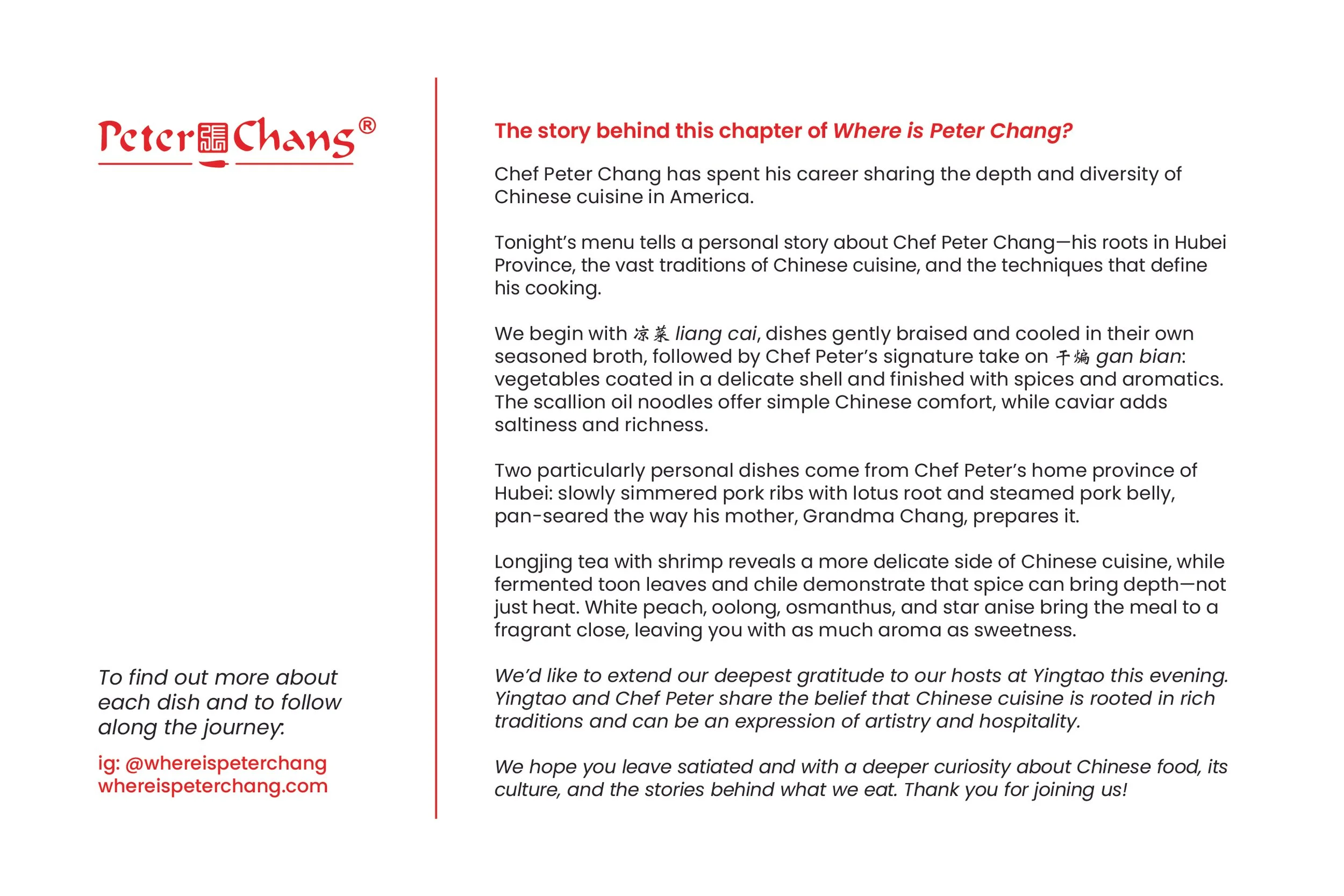
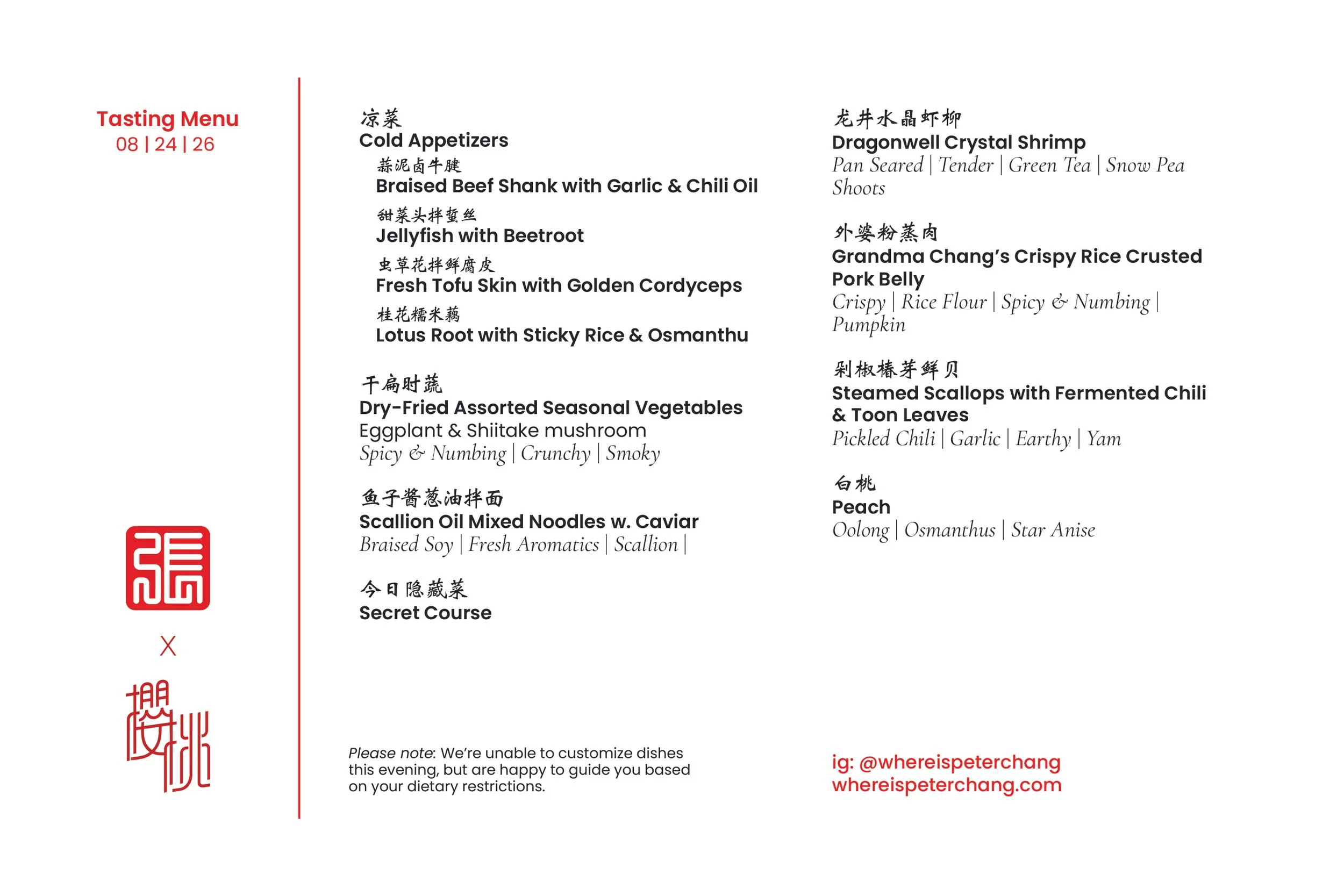
Cold Appetizers 凉菜
蒜泥卤牛腱 Braised Beef Shank with Garlic & Chili Oil
甜菜头拌蜇丝 Jellyfish with Beetroot
虫草花拌鲜腐皮 Fresh Tofu Skin with Golden Cordyceps
桂花糯米藕 Lotus Root with Sticky Rice & Osmanthus
The cold appetizers are actually shared with the same underlying technique: they are first gently braised in a deeply seasoned liquid, then allowed to rest and cool in that same broth. As the temperature slowly drops, the ingredients continue absorbing the soy, spices and aromatics around them. Only afterward are they sliced, dressed and served cold.
There is also a practical history behind this style of cooking. Braised foods keep particularly well when chilled, so they could be prepared ahead and served over several meals. What began partly as practicality became an entire category of Chinese cooking—凉菜 liang cai, the cold dishes that traditionally open a meal.
In Chinese cooking, cold doesn't necessarily mean raw or simply chilled. Many cold dishes actually begin with a long, warm braise. We let the ingredients cool completely in their own cooking liquid, almost like steeping tea, so the flavor continues to penetrate as they rest.
Dry Fried Assorted Seasonal Vegetables 干扁时蔬
Eggplant & Shiitake mushroom
Spicy & numbing / Crunchy / Smoky
干煸 gan bian is traditionally about driving moisture out and concentrating flavor. Chef Peter's version takes that idea and develops it into a recognizable house technique.
Seasonal vegetables such as eggplant and shiitake are coated in a specially balanced, and light batter. The goal isn't to encase the vegetable in breading, but creating a delicate shell while preserving the character of what's inside.
After frying, the vegetables go back into the wok with dry spices, Chinese herbs and aromatics. That second trip through the wok is what gives the dish its fragrance and slightly smoky finish.
This is one of Chef Chang's signature techniques. The batter is intentionally very thin—we want you to taste the vegetable first, then the crunch. After frying, everything goes back into the wok with spices and aromatics, so the final layer isn't a sauce; it's fragrance.
Scallion Oil Mixed Noodles w. Caviar 鱼子酱葱油拌面
Braised soy / Scallion / Fresh Aromatics
葱油拌面 is fundamentally an extremely simple Chinese comfort food: noodles, scallion oil and soy. Its appeal comes from extracting as much fragrance as possible from fresh scallions (yes, we use a lot of scallion roots) by slowly cooking them in oil. By adding caviar, it naturally fits the Chinese flavor structure: saltiness, umami and richness against fragrant scallion oil and noodles.
Secret Course 今日隐藏菜
Surprise course: This is probably one of the most personal dish on tonight's menu. Chef Chang comes from Hubei, a province shaped by rivers and hundreds of lakes, where lotus root grows abundantly. Pork ribs and lotus root are traditionally slowly simmered together until the pork becomes tender, the lotus root turns soft and almost creamy, and its natural sweetness enriches the broth.
龙井水晶虾柳 Dragonwell Crystal Shrimp
Pan seared / Tender / Green tea / Snow pea shoots
Many American diners first came to know Chef Chang through bold Sichuan cooking. This course shows another side of Chinese cuisine. 龙井虾仁 is closely associated with Jiangnan (Hangzhou, Zhejiang & Shanghai) cuisine. Longjing (Dragon Well) is one of China's most celebrated green teas. Pairing its delicate fragrance with fresh shrimp creates a dish famous for freshness. The tea should perfume the shrimp rather than overpower it.
Grandma Chang's Crispy Rice Crusted Pork Belly 外婆粉蒸肉
Crispy / Rice flour / Spicy & numbing / Pumpkin
粉蒸肉 is pork belly coated with seasoned rice flour and steamed until the fat softened and the rice absorbed the juices beneath it. It's a homestyle preparation in Chef Peter's hometown Hubei. Grandma Chang (Chef Peter's mom) likes to pan sear the steamed pork belly to give it a crispy texture.
Steamed Scallops with Fermented Chili & Toon Leaves 剁椒椿芽鲜贝
Pickled chilis / Garlic / Earthy / Yam
For many Chinese people, 香椿 is strongly associated with spring because the tender young shoots have a short season and a very distinctive, almost impossible to compare aroma. Our toon leaves is preserved fermented and pickled. Pairing that earthy green character with our made in house fermented chile, we hope to showcase that Chinese spicy flavor isn't always simply “hot.” Fermentation brings acidity, funk and depth.
Peach 白桃
Oolong / Osmanthus / Star anise
Chinese desserts often approach the end of a meal differently, not necessarily with more richness, but with fragrance. White peach is paired here with oolong tea, osmanthus and star anise. Osmanthus is especially beloved in China for its delicate floral, almost apricot like perfume, so the final course is meant to leave you with aroma as much as sweetness.